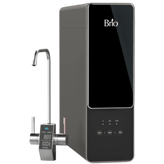
Brio G20-U Reviews: See Why 0 Shoppers Rated It 0 Stars!
Some love the Brio G20-U water filtration system, others were let down. Find out what 0 shoppers really thought of these Brio Water water filtration systems — before you make your choice.
 Supermod
  Moderator
 Recaptor
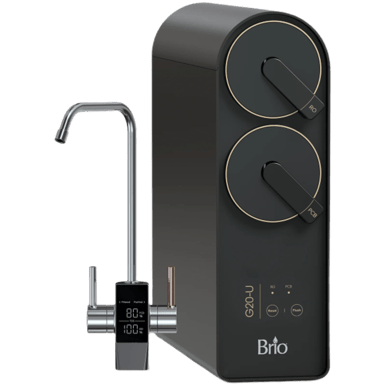
 Brio G20-U Review: Compact RO Filtration Aimed at Real-World Kitchens
The Brio G20-U is an under-sink reverse osmosis system built to deliver cleaner, better-tasting water without dominating your cabinet. This review of the Brio G20-U takes its cues from the published specifications rather than hands-on testing. That lens actually fits the product well: the numbers tell a story of compact dimensions, high nominal capacity, and a modern control experience that should appeal to apartments, offices, and small households. It's a filtration system that leans on a classic reverse osmosis design with carbon and sediment support stages, wrapped in a tidy black housing aimed at contemporary spaces.
Detailed Specs & Features
At the heart of the Brio G20-U is a three-stage architecture: sediment, carbon, and RO membrane; listed as 3 stages using a blend of Carbon, Sediment, and Reverse Osmosis. The media includes coconut carbon block and activated carbon to tackle chlorine and VOCs before water meets the RO membrane. On paper, that combination targets a wide range of contaminants: lead, arsenic, nitrates, heavy metals, and more, culminating in claimed 99% bacteria removal and 99% reduction in VOCs. For a compact unit, that's a compelling promise.
Capacity is where the G20-U raises eyebrows. The sheet cites a robust 700 gal/day throughput with a tidy 2:1 recovery ratio. Translated, the system aims to waste less water than older RO designs (which historically hovered near 3-4:1) while still keeping up with typical household demands. Brio positions this for 1-4 people, which aligns with the capacity and the stated 67% water efficiency. If you've hesitated on RO because of wastewater, that recovery figure is a welcome sign.
Power-wise, the G20-U draws from electricity with a 24-volt adapter and a modest 80-watt consumption figure. There's no dual-voltage support listed, so international users will want to double-check compatibility or use an appropriate transformer. In day-to-day use, the electrical assist should help keep flow stable when feed pressure dips within the specified 14.5 psi minimum to 60 psi maximum operating envelope.
From a certification standpoint, the inclusion of NSF/ANSI 42 and 58 on the spec sheet is meaningful. NSF/ANSI 42 addresses aesthetic effects (like chlorine taste and odor), while 58 is specific to reverse osmosis systems and addresses TDS reduction and structural integrity criteria. The G20-U also claims UL electrical compliance and UL94 fire safety standards, rounding out an appliance-grade approach that inspires confidence, at least on paper.
The physical footprint feels under-sink friendly. The unit measures 5.2 inches wide by 18.2 inches deep and 16.5 inches tall; slim enough for most base cabinets without sacrificing cartridge size. Weight is listed at 31.2 lbs, which suggests a solid internal frame and components. The exterior is modern and black, and although finishes are described as polished or matte, the real appeal is clean lines and clear status indicators. The innovative features include a TDS monitor and filter life indicator on an LED display, plus a brilliant faucet that gives you live feedback while dispensing.
One more practical angle: warranties. The G20-U ships with a 1-year parts warranty and a 1-year labor warranty, which is pretty standard in this class. There's no extended warranty option listed, so factor that into the long-term cost of ownership.
Design & Build
On paper, the Brio G20-U is built for tidy installs. The compact body, tool-free cartridge changes, and quick-connect fittings all suggest an approachable DIY experience. The housing leans on plastic and polypropylene with silicone O-rings and brass valves where it counts; an expected material mix that balances cost with durability. It's also rated for corrosion resistance and is BPA-free and lead-free compliant, which aligns with modern expectations for kitchen filtration hardware. The 30-minute installation estimate feels optimistic for first-timers, but the inclusion of an installation kit, digital maintenance alerts, and a leak detection system all point to an owner-friendly setup.
Performance
According to its design, performance should be anchored by the RO membrane's ability to lower TDS and target heavy metals and troublesome ions like nitrates. The spec sheet claims high reduction rates for lead and VOCs, and promises improved taste and odor via carbon block pre-filtration. The stated 0.07 gal/min flow rate is conservative; that being said, RO systems often prioritize purity over raw speed. If you're filling a kettle or a bottle, expect a steady, measured stream rather than a flood. The 2,000 ppm TDS maximum support is pretty generous for municipal tap scenarios and should cover the vast majority of residential use cases.
Noise is rated at 45 dB, roughly the sound of a quiet library; noticeable in a silent kitchen but unlikely to be disruptive. The system powers on quickly (listed 8-second startup) and includes an auto shutoff after inactivity to conserve energy. There's no dedicated eco-mode, but given the modest wattage and intermittent duty cycle, the overall electrical footprint should remain small.
Extra Features
The brilliant faucet and LED status readouts are deceptively useful. Real-time TDS visibility demystifies what RO is doing for your water; you'll see trends as filters age or feed water quality shifts. The filter-life indicator should reduce guesswork and help you plan maintenance rather than reacting to taste changes. While there's no UV light, remineralization, or antibacterial layer, the system sticks to the fundamentals and keeps complexity (and cost) in check. If you prefer water with a slightly higher pH or a "mineral" mouthfeel, note that there's no remineralization stage built in; you'd need an add-on post-filter to get that profile.
Pros & Cons
Pros
- Slim under-sink footprint with straightforward DIY installation and tool-free cartridge changes.
- Strong paper specs: three-stage RO with broad contaminant coverage and NSF/ANSI 42 & 58 listed.
- Brilliant faucet with live TDS and filter-life indicators adds real-world convenience.
- Claimed 2:1 recovery ratio and 67% water efficiency are better than many legacy RO systems.
- Reasonable operating pressure window (14.5-60 psi) with powered assist to stabilize flow.
Cons
- Spec sheet inconsistencies (e.g., membrane and micron ratings, fluoride notes) warrant double-checking before purchase.
- No remineralization stage; those who prefer "spring-like" taste will need an add-on cartridge.
- Flow rate is modest by design; filling large pitchers or pots will take patience.
- No explicit extended warranty option listed for long-term coverage.
Price & Value for Money
Pricing puts the Brio G20-U squarely into the mid-range for innovative, compact RO systems. If cost is your tiebreaker, the more aggressive street price appears to be $310 at HomeDepot.com, which undercuts Brio's own MSRP. At that number, the value case looks favorable: you're getting a space-efficient unit with modern monitoring, a two-to-one recovery ratio, and broad contaminant claims. On the flip side, plan for ongoing filter replacements over time (the sheet lists maintenance at 12 months, though specific cartridge intervals aren't spelled out), and consider adding a post-remineralization stage if taste profile is a priority.
Who should buy it? Households of one to four users, staff kitchens, or small offices that want clean, reliable RO water without a bulky tank or complicated install. Who should skip it? If you need ultra-fast dispensing, built-in remineralization, or enterprise-grade service coverage, you may want to look at higher-capacity or premium modular systems.
Quick Take
The Brio G20-U looks like a thoughtfully sized RO unit with thoughtful feedback that keeps you in the loop about TDS and filter life. On paper, its recovery ratio and certifications make a strong case for quality water at reasonable efficiency. Just be mindful of a few oddities in the spec sheet and plan for add-ons if you're chasing a mineral-rich taste.
Closing Recommendation
Based on specifications and listed features, the Brio G20-U is easy to recommend to renters, condo owners, and small families who value a clean install and visible water quality metrics. It's not the flashiest system, but it leans into fundamentals: RO purity, proper monitoring, and sensible efficiency, while keeping price in check. If remineralization matters or you want faster flows, budget for a companion cartridge or consider stepping up to a system purpose-built for higher output.
Verdict
Rating: Based on the specifications and overall feature set, we believe Brio G20-U deserves 4.2 out of 5.
- Winner Feature => Smart faucet with live TDS and filter-life indicators makes maintenance and quality tracking simple.
- Needs Improvement => No built-in remineralization and a few spec inconsistencies that buyers should verify.
Reviews 0
The good, the bad, and the brutally honest.Average Rating

More Water Filtration Systems 666
Unlock more awesome finds.